
Why Mortal Kombat Disappeared From Arcades
The Rise, the Fall, and the Last Quarter of the Arcade Era
In the 1990s, Mortal Kombat ruled the arcade floor.
You could hear it before you saw it. The shouting announcer. The crowd around the cabinet. The glowing buttons. The kid who somehow knew every secret move even though nobody had the internet in their pocket yet.
For a while, Mortal Kombat felt unstoppable.
Then, almost suddenly, it was gone.
No new cabinets.
No new coin slots.
No new arcade crowds waiting to challenge the winner.
The series did not disappear, of course. Mortal Kombat continued on home consoles for decades. But the place where it first became a cultural monster — the arcade — slowly slipped away from it.
So what happened?
The short answer is simple: Mortal Kombat did not fail in arcades. The arcade world changed around it.
The longer answer takes us back to 1992.
Mortal Kombat Arrives: The Arcade Gets Dangerous
The original Mortal Kombat was released by Midway in arcades in 1992. It entered a fighting game scene already dominated by Street Fighter II, but it did not try to beat Capcom by simply copying it. Instead, Mortal Kombat went in a completely different direction.
Street Fighter II looked bright, colourful, and cartoon-like. Mortal Kombat looked like something else entirely. It used digitized actors, giving the fighters a more realistic appearance than most arcade games of the time. That alone made people stop and look.
Then came the atmosphere.
Mortal Kombat felt darker. Stranger. More mysterious. The characters were instantly memorable: Scorpion, Sub-Zero, Raiden, Liu Kang, Sonya Blade, Johnny Cage, Kano, and the rest of the original cast. It had martial arts, supernatural elements, secret characters, and finishing moves that became infamous almost overnight.
The controversy only made it bigger. Mortal Kombat became one of the key games in the early 1990s debate over video game violence, a debate that helped lead to the creation of the ESRB rating system.
That controversy could have destroyed a lesser game.
For Mortal Kombat, it became fuel.
People wanted to see what the fuss was about. Kids talked about it at school. Magazines teased rumours and secret codes. Arcades became testing grounds where players tried to separate fact from playground legend.
Was Reptile real?
Could you fight hidden characters?
Was there another secret nobody had discovered yet?
Mortal Kombat understood something powerful: in the arcade era, mystery was marketing.
Mortal Kombat II: The Peak of the Arcade Monster
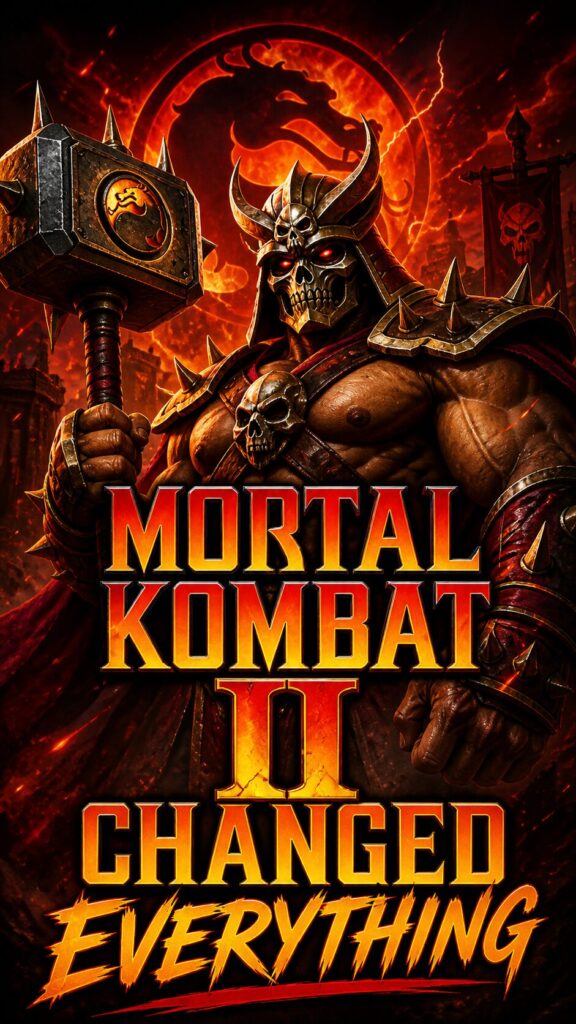
Then came Mortal Kombat II in 1993.
This was the game that proved Mortal Kombat was not a one-hit arcade shock machine. It was bigger, sharper, faster, and deeper than the original. It expanded the world beyond the first tournament and pushed the series into Outworld, giving it a much stronger fantasy identity.
The roster also exploded with new characters. Mortal Kombat II introduced or expanded the presence of now-iconic fighters like Kitana, Mileena, Kung Lao, Baraka, Jax, and the villainous Shao Kahn.
This was Mortal Kombat at its arcade peak.
It had more secrets.
More stages.
More characters.
More finishing moves.
More rumours.
And most importantly, it had momentum.
By this point, Mortal Kombat was not just “that violent arcade game.” It was a serious competitor to Street Fighter II. It had its own identity, its own fanbase, and its own mythology. The series no longer felt like a novelty. It felt like an arcade empire.
Mortal Kombat II was also a massive commercial success. It became one of the defining arcade games of its time, with strong cabinet sales and huge attention around its home releases.
For many fans, this was the golden moment.
The original Mortal Kombat was the shockwave.
Mortal Kombat II was the earthquake.
Mortal Kombat 3: Faster, Riskier, and More Divisive
By 1995, Midway needed to keep the series moving. The arcade scene was still alive, but the pressure was building. Fighting games were everywhere. Sequels had to feel new. Players wanted more speed, more depth, and more reasons to keep putting quarters into the machine.
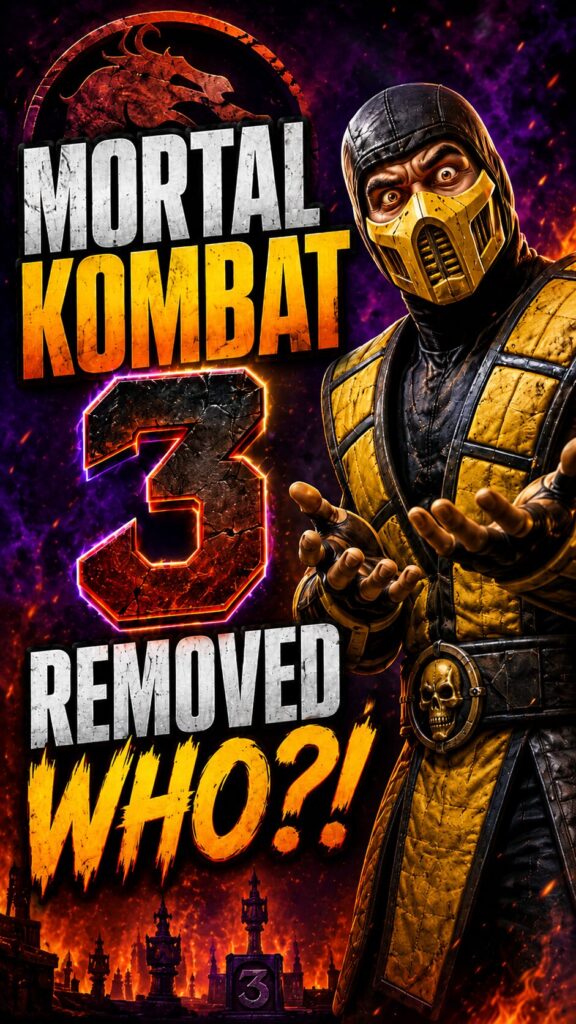
So Mortal Kombat 3 changed the formula.
The game introduced the Run button, which made fights faster and more aggressive. Combos became a much bigger focus. The pace shifted away from the slower, more deliberate feel of the earlier games. Mortal Kombat 3 wanted to feel modern, intense, and more technical.
It also changed the setting. Instead of leaning fully into the mysterious tournament feel of the first two games, Mortal Kombat 3 focused on an Earth invasion storyline. The tone became more urban, industrial, and grim.
The new roster included characters like Kabal, Nightwolf, Stryker, Cyrax, Sektor, and Sindel.
On paper, that sounds exciting.
But then players noticed who was missing.
No Scorpion.
No Kitana.
No Mileena.
No Reptile.
No Johnny Cage.
No Raiden.
For a series built on instantly recognizable characters, this was a huge gamble.
The reasons were not as simple as “Midway forgot the favourites.” Mortal Kombat 3 was dealing with a mix of technical limits, creative decisions, and behind-the-scenes complications. The team was trying to move away from relying too heavily on palette-swapped ninja characters. They were also pushing a new story direction and a more aggressive gameplay style.
But for a lot of fans, none of that mattered.
They walked up to the cabinet, looked at the roster, and wondered where half the soul of the series had gone.
This is why Ultimate Mortal Kombat 3 became so important. Released after Mortal Kombat 3, it restored several fan favourites and helped repair the feeling that something essential had been missing. For many players, Ultimate Mortal Kombat 3 is remembered more fondly than the original Mortal Kombat 3 because it feels closer to the full Mortal Kombat experience people expected.
Mortal Kombat 3 was bold.
Ultimate Mortal Kombat 3 was the correction.
Mortal Kombat 4: The Last True Arcade Mortal Kombat
Then came the turning point: Mortal Kombat 4.
Released in arcades in 1997, Mortal Kombat 4 was the first mainline game in the series to use 3D computer graphics. It also introduced weapons and a new visual style, moving away from the digitized actor look that had defined the original trilogy.
The roster brought in new characters like Quan Chi, Shinnok, Fujin, Reiko, Jarek, and others, while also keeping some familiar names around.
But Mortal Kombat 4 felt different.
Not just visually.
Not just mechanically.
Emotionally.
The first three Mortal Kombat games belonged completely to the arcade era. They were loud, immediate, and built around short matches, crowd reactions, and quarter-to-quarter competition. Mortal Kombat 4 still existed in that world, but it also felt like it was pointing toward another one.
The transition to 3D was understandable. By the late 1990s, 3D graphics were becoming the future of gaming. Tekken, Virtua Fighter, and other 3D fighters had changed what players expected from the genre. Mortal Kombat had to respond.
But the result was more mixed than the earlier arcade classics. Mortal Kombat 4 was important, but it did not dominate the arcade scene in the same way Mortal Kombat II had.
And historically, it holds a very specific place in the franchise:
Mortal Kombat 4 was the last mainline Mortal Kombat game released in arcades.
After that, the series continued.
But the cabinets stopped.
The 2000s: Mortal Kombat Leaves the Arcade Behind
In the 2000s, Mortal Kombat moved fully into the home console world.
Games like Mortal Kombat: Deadly Alliance, Mortal Kombat: Deception, and Mortal Kombat: Armageddon were designed for living rooms, not arcade floors.
That changed everything.
Home console Mortal Kombat games could have larger story modes, more unlockables, more characters, more cutscenes, more single-player content, and more complex progression systems. These were not games built around someone dropping in a quarter and playing a few quick rounds before the next challenger stepped up.
They were built to be owned.
That shift made sense because the entire gaming industry was moving in that direction. By the late 1990s and early 2000s, home consoles were becoming powerful enough to deliver deep, impressive experiences that no longer felt like weaker versions of arcade games.
The arcade was no longer the obvious place to see the future first.
In earlier years, arcade games looked and felt more advanced than what most people had at home. That was part of the magic. You went to the arcade because the cabinet offered something your home console could not.
But that gap kept shrinking.
The PlayStation, Nintendo 64, Dreamcast, PlayStation 2, Xbox, and GameCube changed expectations. Players could now get huge games at home without feeding quarters into a machine. Fighting games still mattered, but the business model was changing.
Mortal Kombat followed the audience.
And the audience was going home.
Why Did Mortal Kombat Disappear From Arcades?
Mortal Kombat’s arcade disappearance was not caused by one single thing. It was the result of several changes happening at the same time.
1. Arcades Were Declining in North America
By the late 1990s, traditional arcades were already losing cultural power in many parts of North America. They did not vanish overnight, but they were no longer the default center of gaming culture.
Home consoles were becoming more powerful. Rental stores, living room multiplayer, and eventually online play all pulled attention away from the arcade.
Mortal Kombat was born in an era where arcades still felt like the main stage.
By the 2000s, that stage had moved.
2. Games Were Getting Too Big for the Old Arcade Model
Early Mortal Kombat games were perfect arcade products. You could understand them quickly, play a match, lose, win, or challenge someone else.
But later Mortal Kombat games became bigger and more complicated.
They had story modes.
Unlockables.
Extra modes.
3D arenas.
Longer progression.
More content designed for repeated home play.
That kind of experience did not fit as naturally into a cabinet asking for coins every few minutes.
3. Midway Shifted Toward Console Development
Midway adapted to where the money and audience were going. The company continued making Mortal Kombat, but the focus shifted toward console-first development. Mortal Kombat was no longer mainly an arcade product that later came home. It became a home console franchise.
That changed the design philosophy.
The question was no longer, “How do we get players to put in another quarter?”
It became, “How do we make this worth buying for a home system?”
That is a very different kind of game.
4. The Fighting Game Scene Changed
The fighting game genre also changed dramatically. In the early 1990s, Street Fighter II and Mortal Kombat helped define the arcade fighting boom. But by the late 1990s, the genre was crowded, fragmented, and evolving.
3D fighters gained popularity. Console ports improved. Competitive scenes started forming in different ways. Arcades still mattered, especially in some regions and communities, but the universal arcade dominance of the early 1990s was fading.
Mortal Kombat had to survive beyond the cabinet.
And it did.
Did Mortal Kombat Fail in Arcades?
No.
That is the important thing.
Mortal Kombat did not disappear from arcades because nobody cared anymore. It disappeared because the arcade business around it was changing.
The early Mortal Kombat games were massively successful. The original grabbed attention. Mortal Kombat II became a phenomenon. Mortal Kombat 3 and Ultimate Mortal Kombat 3 kept the franchise alive during the mid-90s fighting game boom. Mortal Kombat 4 carried the series into 3D and became the final true arcade chapter.
After that, Mortal Kombat did what many surviving arcade franchises had to do.
It evolved.
It left the arcade not because it was dead, but because the arcade was no longer the best place for it to live.
Mortal Kombat Is Back in Arcades… Sort Of
Today, Mortal Kombat does exist in arcade form again — but mostly as nostalgia.
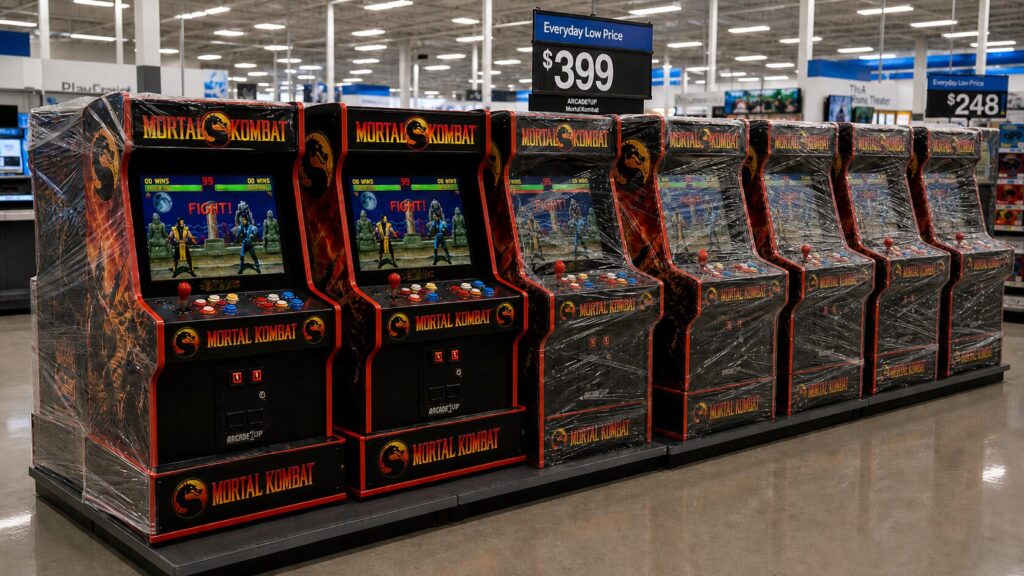
Companies like Arcade1Up have released home arcade cabinets featuring classic Mortal Kombat titles such as Mortal Kombat, Mortal Kombat II, and Ultimate Mortal Kombat 3. These cabinets are fun, collectible, and a great way to recreate a piece of the old arcade feeling.
But they are not new arcade releases.
They are recreations of the past.
That distinction matters.
Modern Mortal Kombat is now a console and PC franchise. The arcade version of Mortal Kombat is a memory, a tribute, and a collectible experience. It is not where the next chapter begins anymore.
The new games launch on modern platforms.
The old cabinets preserve the legend.
The Last Quarter
There is something bittersweet about Mortal Kombat’s arcade history.
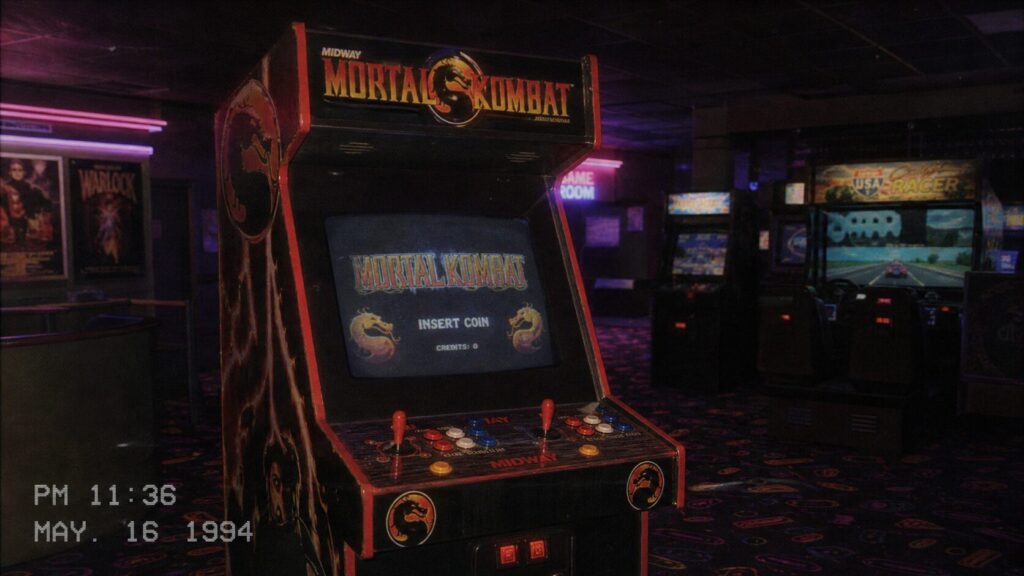
The series was built for that environment. The noise. The crowd. The cabinet art. The uncomfortable joystick. The sticky buttons. The pressure of knowing someone was standing behind you, waiting to take your place if you lost.
Mortal Kombat was not just a game you played.
It was a scene.
You discovered it in public. You learned secrets from other players. You saw moves before you knew how to do them. You heard rumours that may or may not have been true. You watched someone dominate the machine and wondered if you could beat them.
That experience is hard to recreate.
Modern games are bigger, cleaner, deeper, and more polished. But the arcade had something else. It had presence.
Mortal Kombat’s arcade run began in 1992 and effectively ended with Mortal Kombat 4 in 1997. In just five years, it went from shocking newcomer to cultural giant to the end of an era.
And that is why the story still matters.
Mortal Kombat did not fail in arcades.
The arcades disappeared around it.
And the last time you could play a brand-new Mortal Kombat game in an arcade was 1997.
I was there.
And honestly?
I’d give my last quarter to be there again.